
There's a moment that happens on almost every project. The design is almost right. The proportions are working, the materials are speaking to each other, the floor plan flows — and then someone says, "What if we added…"
It's a reasonable instinct. Design culture rewards complexity. We're surrounded by spaces that signal their sophistication through elaboration: another layer of moulding, a more intricate tile pattern, a ceiling detail that announces itself. The assumption is that more considered means more effort, and more effort means more value.
We've spent fifteen years pushing back against that assumption.
The discipline of no
Every project we take on starts with a brief. We listen for what the client wants, yes — but more importantly, we listen for what the project needs. The site, the program, the light, the way of living. Those parameters are the beginning of a design language, and the job of design is to be faithful to that language, not to override it.
What that means in practice is that the best decisions are often refusals. The kitchen island that could seat eight but should seat six. The exterior material that has four components when three would have more presence. The window that gets smaller, not larger, because it focuses rather than floods.
"The homes we're most proud of aren't the ones where we solved the hardest problems. They're the ones where we asked the simplest questions and held to the answers."
This is harder than it sounds. There's a kind of courage required to defend emptiness — to argue that a wall should stay blank, a material should stay simple, a detail should stay quiet. Especially when you're sitting across from a client who's spent months building expectation.

Restraint isn't minimalism
We want to be precise about what we mean. Restraint isn't the same as minimalism. Minimalism is a style — an aesthetic position that values reduction as an end in itself. It can be beautiful, but it can also be cold. It can prioritize appearance over inhabitation.
Restraint is a method. It's the discipline of making every element earn its place. A restrained home can have warmth, texture, character — it can have a lot going on. What it won't have is things that are there because no one stopped to ask if they needed to be.
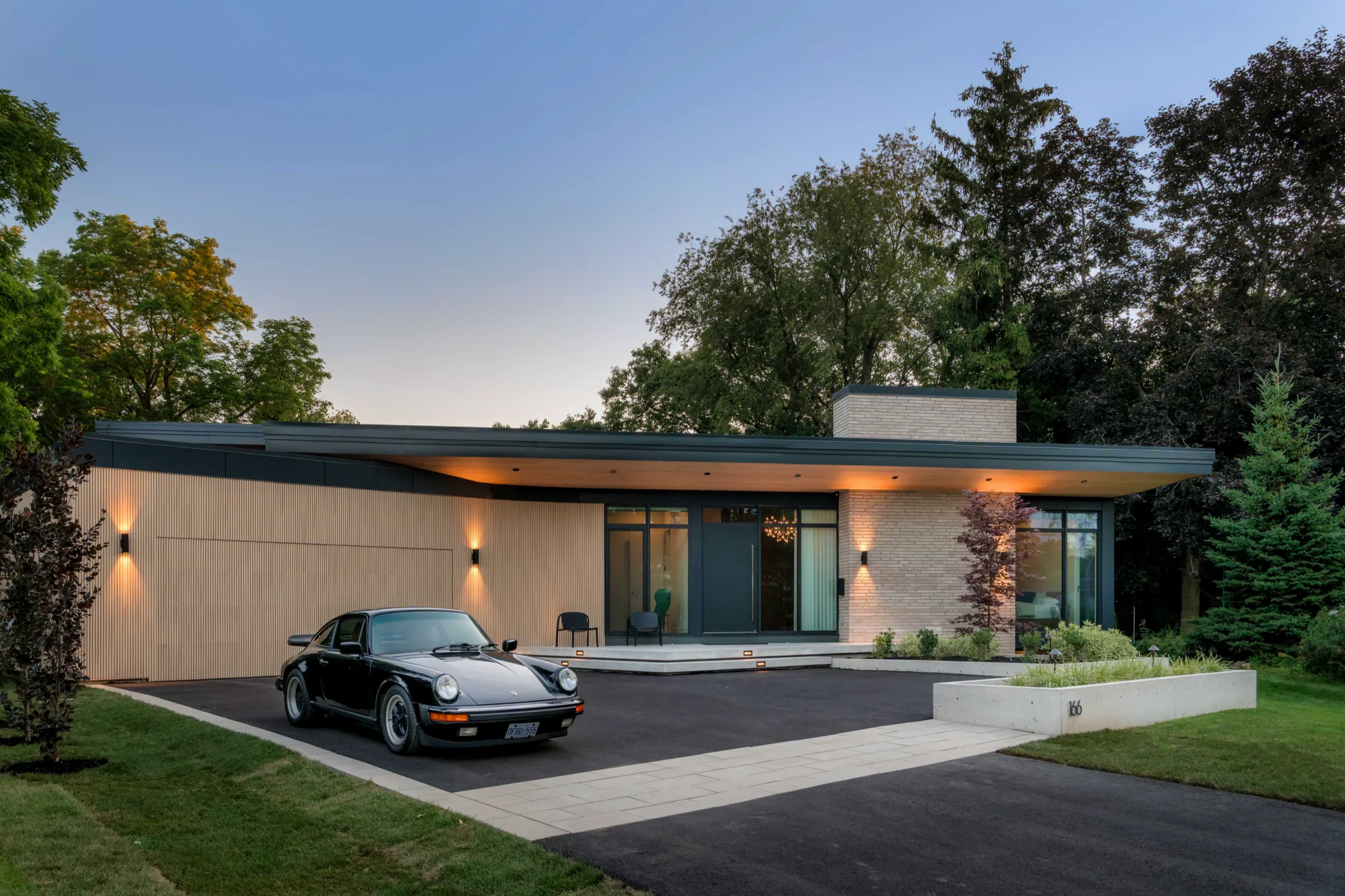
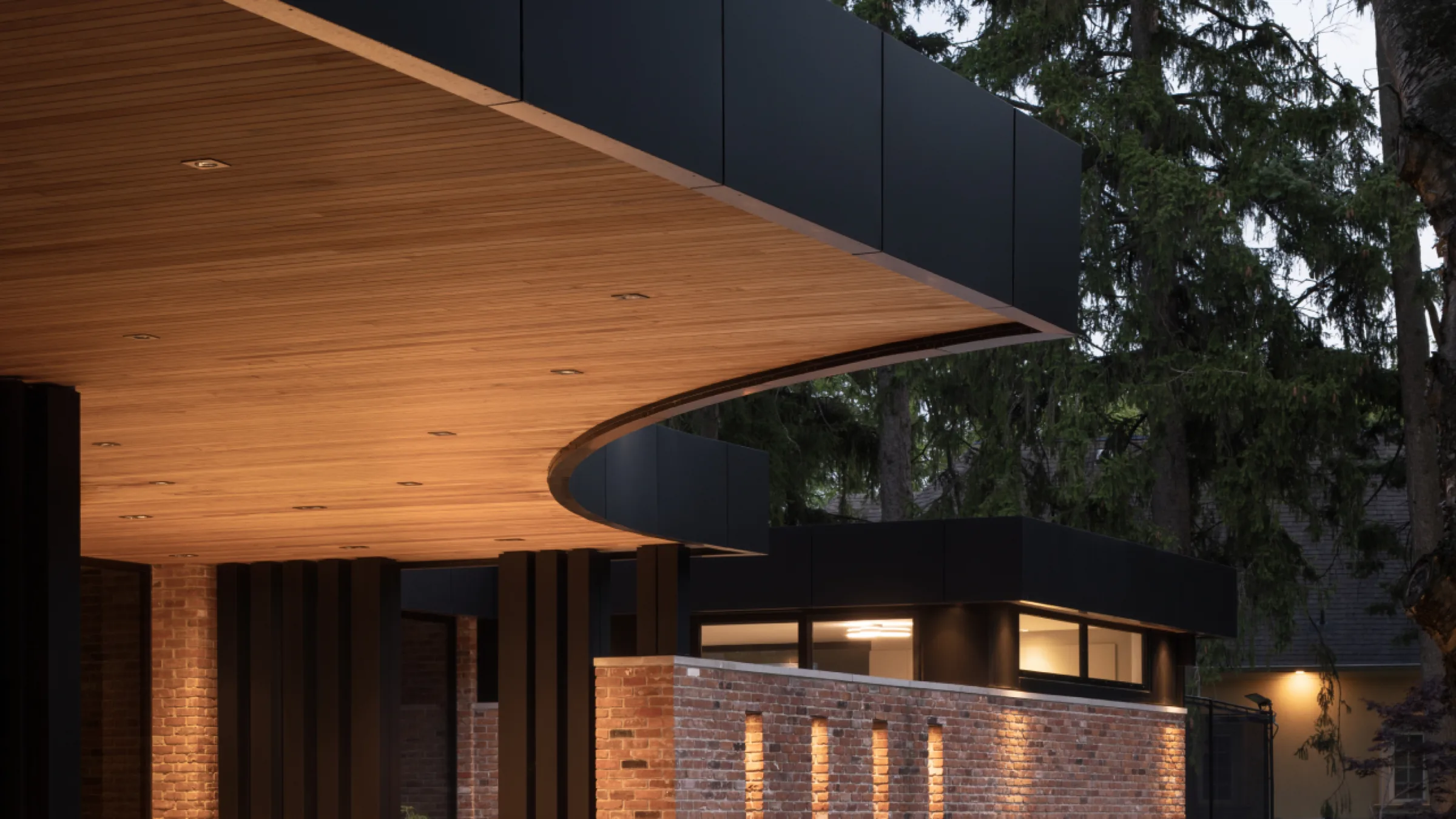
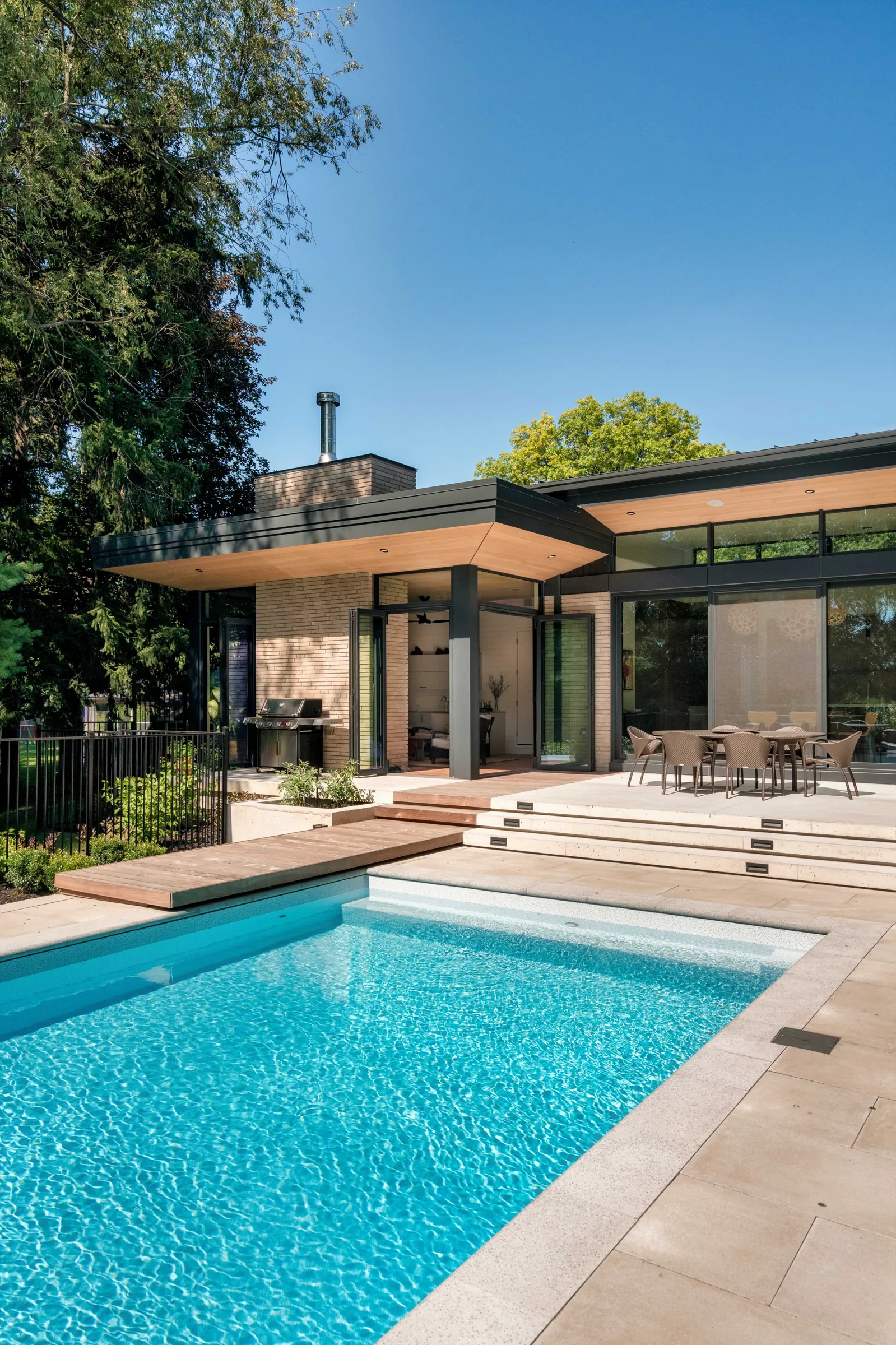
The Beverly Court project is a good example. It reads, from the outside, as relatively simple: single storey, flat rooflines, a limited palette of light brick, cedar cladding, and black steel. But those three materials are doing enormous work. The brick anchors the home to the ground. The cedar introduces warmth and grain. The steel provides precision at the edges.
None of those were arbitrary choices. Each one was weighed against alternatives, tested against the site and the light, kept because it earned its place — and we stopped when we had what we needed.
What clients are really asking for
When someone comes to us wanting a custom home, what are they actually asking for? On the surface: a design that reflects their taste and fits their life. But underneath that, if you listen closely, is almost always a deeper question: make me a home that feels right.
Rightness, in our experience, comes from coherence. From spaces where the decisions have an internal logic, where you don't have to notice the design because it's busy supporting the life being lived in it. That quality is almost impossible to achieve through addition. It has to be earned through editing.
The clients who have pushed back most in the process — the ones who challenged every decision, who made us defend every choice — have almost always ended up with the homes we're most proud of. Not because the adversity was the point, but because the discipline it imposed made the design stronger.
Practical implications
What does designing by subtraction look like in practice? A few things we come back to on every project:
Commit to a material palette early — and mean it. Most projects benefit from three to four primary materials. If you can't define what the project is made of in a sentence, the palette probably isn't resolved yet.
Let structure be honest. Exposed beams, concrete, steel — when structure is doing the work of design, you don't need to layer decorative elements over it. Let it speak.
Question every threshold. Door and window openings are where a lot of unnecessary complexity accumulates. Ask whether each one is the right size, the right proportion, in the right relationship to what's around it.
Leave room for living. A design that's fully resolved is one that leaves space for the people who live in it to make it their own. If every surface is occupied, there's nowhere to land.
The best homes we've designed have one thing in common: they don't feel designed. They feel found. That's the goal — to work hard enough that the work becomes invisible, and what's left is just a place that fits.